Send the Email to the People Who Actually Need It
Blasting every message to the whole club saves the sender a minute and costs everyone else more. Better targeting protects your club's attention, and your credibility.

Part of our series on operational trust: the habits that keep families believing the schedule is current, the messages are relevant, and the system reflects reality.
Every admin knows the shortcut. You’ve got news about the 12U tournament, you’re short on time, and the fastest path is the biggest button: send to everyone. The 16U families who aren’t going, the coaches it doesn’t affect, the parent whose kid plays in a different division entirely. It’s one email. What’s the harm?
The math nobody does
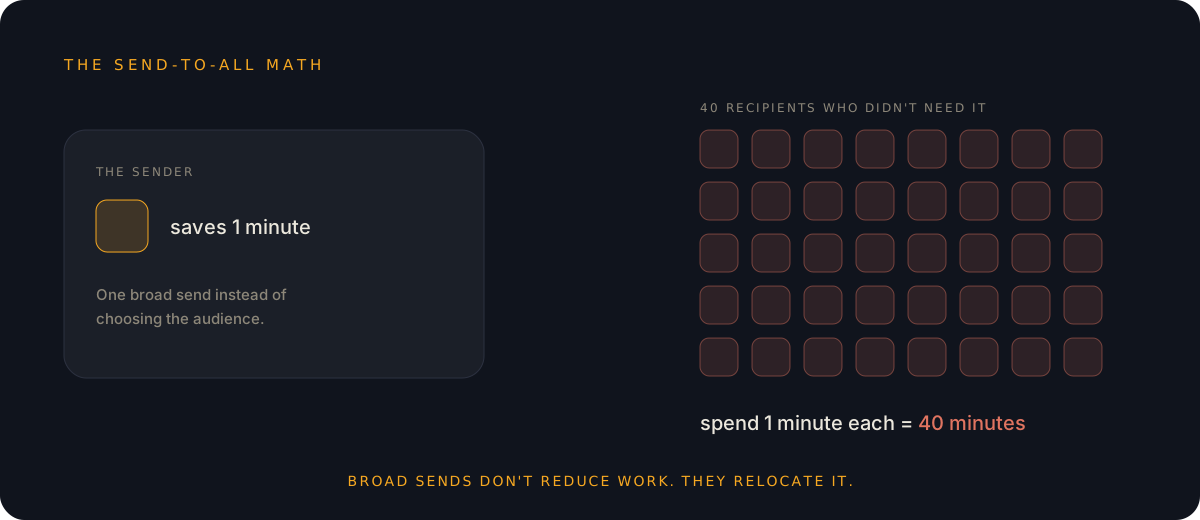
Sending broad saved you, the sender, maybe a minute. But if 40 people who didn’t need the message each spend a minute opening it, reading enough to realize it’s not for them, and archiving it, the club didn’t save time. It spent forty minutes of other people’s time to save one of yours.
That’s the quiet economics of the send-to-all button: it doesn’t reduce work, it relocates it. From one sender to the whole audience, over and over.
What irrelevant email trains people to do
The bigger cost isn’t the minutes. It’s what repeated irrelevance teaches. When half the messages from the club don’t apply to them, families learn to skim. Then they learn to skip. Then the one email that genuinely mattered, the schedule change, the medical form deadline, gets the same two-second glance as everything else, and someone shows up at the wrong field holding the wrong paperwork.
People pay attention to senders who’ve earned it. Every message that lands with a reason builds that credit. Every message that didn’t need to be there spends it.
The habit: pick the audience on purpose
Rostered’s email is built for exactly this. Instead of one giant list, you can send to the people a message is actually about: a division, a team, the families invited to a tournament. So the 12U tournament email goes to 12U tournament families, and nobody else ever knows it existed.
The habit takes ten seconds: before you hit send, ask one question. Does every person receiving this have a reason to receive it? If the answer is “well, it can’t hurt,” it can. Narrow it.
And this isn’t about scolding anyone. Broad sends are what busy people do when the tool makes narrow sends hard. The point is that when the tool makes targeting easy, the ten seconds are worth it every time.
The payoff
Clubs that target well get a strange and wonderful result: their emails get read. Families open messages from the club because history says those messages apply to them. Open rates aren’t the real prize, though. Trust is. When a Rostered notification arrives, the family’s default assumption becomes “this is for us, and it’s probably important.”
The practical rule: every recipient should have a reason to be on the list.
Rostered sends email to the right slice of your club, and those emails are listed in the app too, so nobody has to dig through an inbox to find them again. Get your club rostered.