Run your track & field club
from one app.
Track and field is several sports sharing a squad. Sprinters, distance runners, jumpers and throwers train differently and compete at different points of a long meet day.
Track scheduling for
a squad of specialists.
Meets and training on one schedule, targeted at the athletes each session actually involves.
Sessions targeted at who they involve
Rostered attaches each session and each meet to the teams and athletes it applies to, so families see what concerns them rather than the whole program’s week. A distance runner’s parent is not reading about a throws session, and a thrower’s parent is not trying to work out which of eleven calendar entries is theirs.
Gate entry, the tent, and the forecast
Each meet carries its venue, the address, the coach’s notes about gate entry and where the team tent goes, and the forecast for the day. On a long outdoor day in April that forecast is what a family packs for, and it is on the event rather than in a message somebody sent last Tuesday.
Feeds that keep up, notifications that do not pile up
Subscribed calendars update when a session or a meet time changes, and a change sends one notification for that event rather than one for each adjustment. Repeating training slots are a series, so a family can mute the ones they have committed to memory and still hear about the meets.
Who is competing
at this meet.
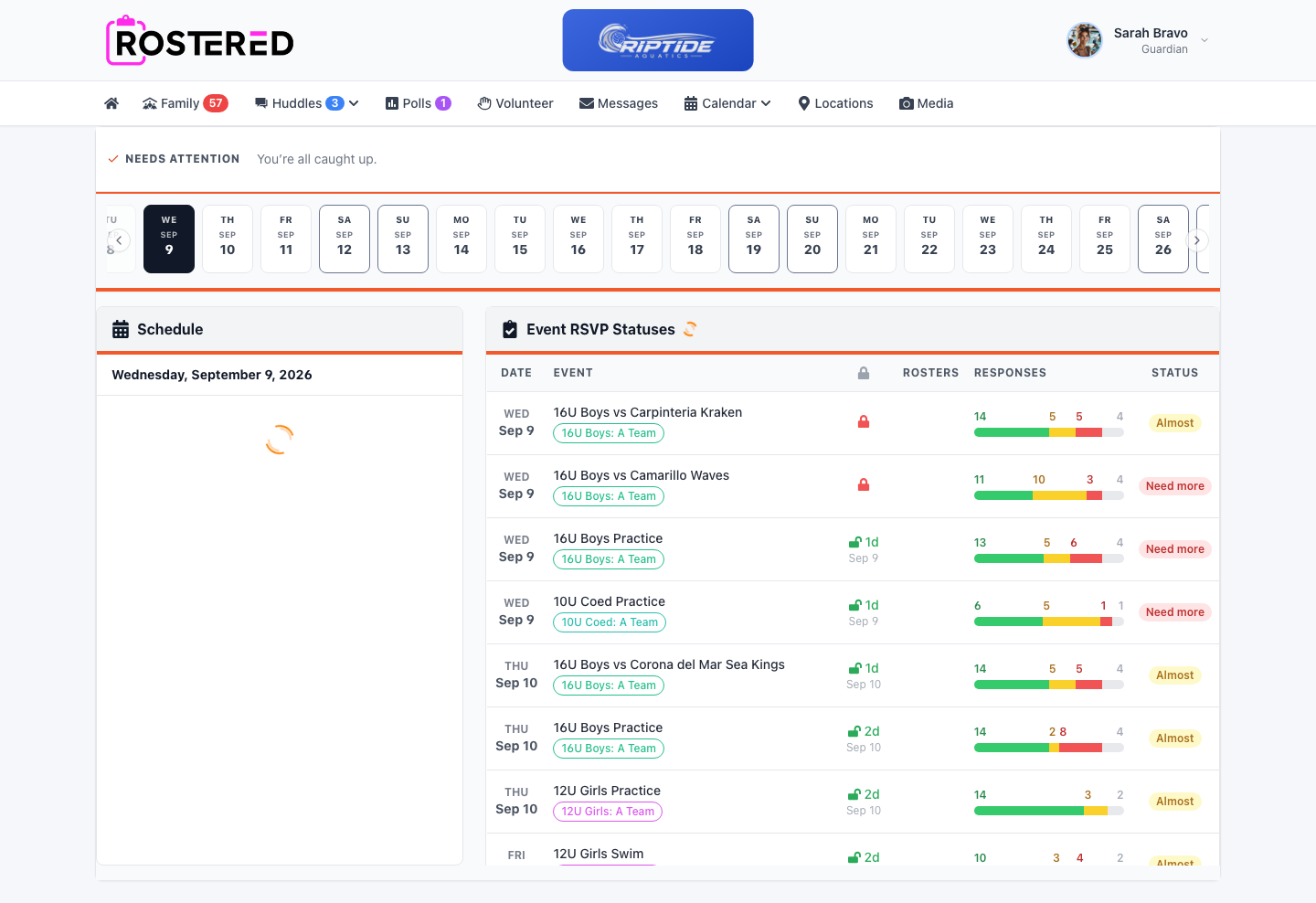
Per-athlete availability per meet, chased automatically, with training attendance marked on the track.
Attending, not attending, or maybe
Each athlete is asked individually and answers in the app or on the web, as attending, not attending, or maybe. Reminders go only to the families who have not replied and link straight to the meet. The invitation is tracked as sent, viewed and answered, so a coach can see who has read the request before chasing them a second time.
Confirmed, declined, pending, with names
Coaches see confirmed, declined and pending with names against each, and can have that summary emailed rather than checking the app between periods. A meet that runs across two days is answered per day, which suits the invitational weekends where a squad splits its entries.
Eighty athletes, one honest picture
Training attendance is marked present or absent from a phone at the track, with excused reasons recorded and a guardian’s own check-in stored separately from the coach’s mark. Across a long season and a squad of eighty, that is the only realistic way to keep an honest picture of who is actually training.
Track rosters:
sprinters, jumpers, throwers.
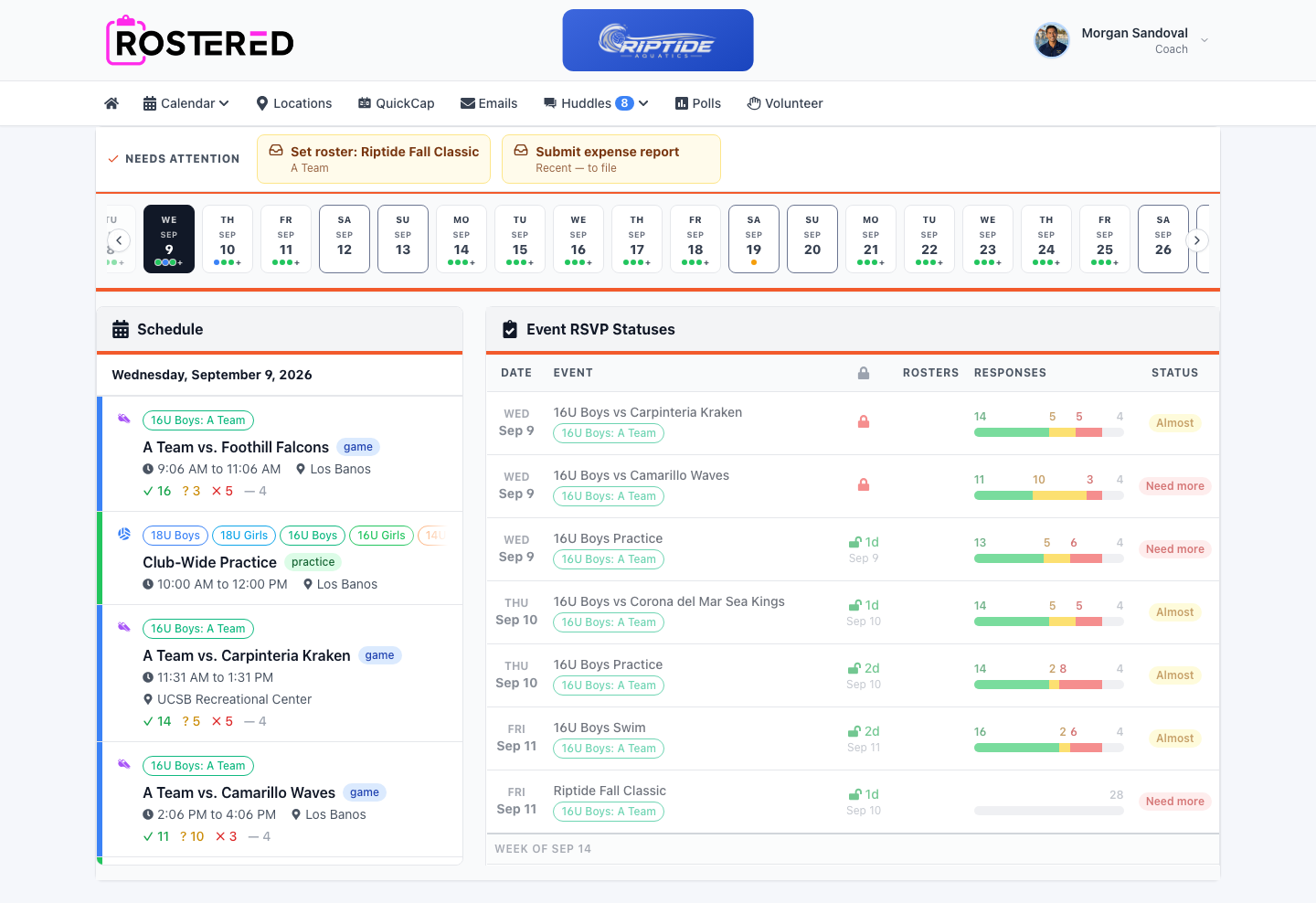
The event groups the sport is actually organized into, with guardian contacts on the roster.
Sprinter, distance, jumper, thrower, relay
Rostered models track and field the way coaches think about it, with athletes carrying their event group: sprinter, distance runner, jumper, thrower and relay runner. A track squad is effectively four squads sharing a facility and a bus, and the roster should say so.
Senior or sophomore, without a second column
Athletes sit in a cohort by graduating year, so the roster knows a senior from a sophomore without a second column that has to be maintained, and a season rollover moves the whole program up a year and retires the graduating group in one action rather than in an afternoon of editing.
Cross country in fall, track in spring
Guardian contacts sit on the roster where a coach can reach them from an away facility, and families with several athletes hold one login, which is common where the same family runs cross country in fall and track in spring and has no appetite for a second account.
Message the group
that needs it.
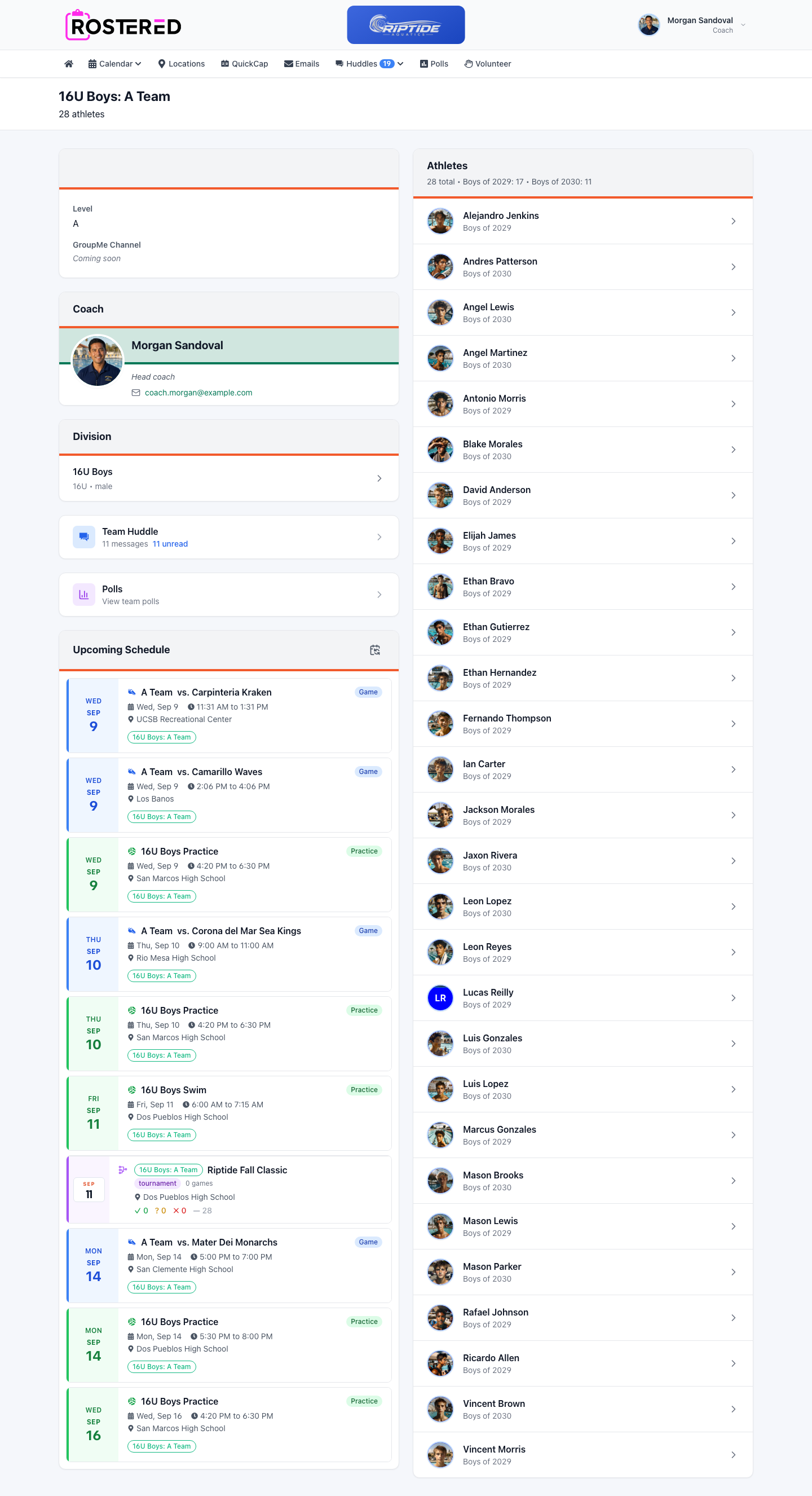
Team and division Huddles with role mentions, so throwers are not woken by a sprint relay change.
A Huddle per team and division
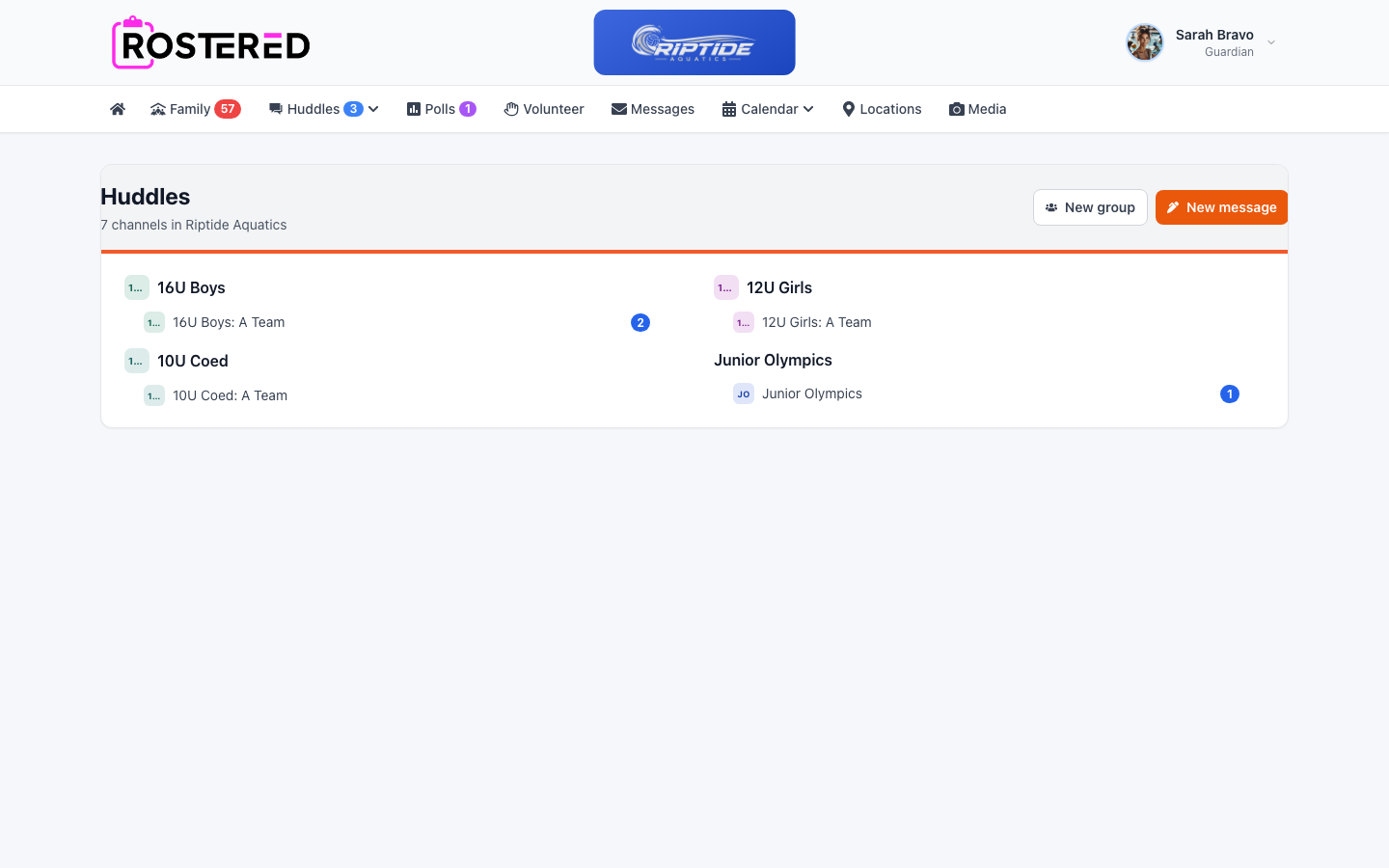
Huddles are created with each team and division, with membership following the roster, so the message reaches the group it is about. Mentioning @coaches or @guardians resolves the role to whoever currently holds it in that Huddle, rather than a list of names assembled in February and never revisited.
The schedule stays with the message
Attachments keep the meet schedule and the event order with the message, and the history stays with the team rather than on a departing coach’s phone. Announcement mode is there for the messages a coach needs read rather than replied to, and a single meet can carry its own Huddle for the day it matters.
Coach Huddles, and email that lasts
Coaches get Huddles of their own at program and division level, which is where the conversation about relay selection belongs. Club email can also be sent from Rostered and is listed inside the app, so a meet schedule sent in March is still findable in May.
What track & field clubs get
- Event groups
- Sprinter, Distance Runner, Jumper, Thrower, Relay Runner
- Governing bodies
- National Federation of State High School Associations
- Also included
- Polls, volunteer jobs, release forms, in-app club email, translation, locations with the forecast.
- Cost to families
- Free, always. No ads.